Pararescue History
The history of Pararescue and concept began in August 1943 when 21 individuals bailed out of a disabled C-46 aircraft over an uncharted jungle near the China-Burma border. Due to the remoteness of the crash site, assistance was delivered by paradrop. Lieutenant Colonel Don Fleckinger and two medical corpsmen volunteered for the assignment. This initial paradrop served as the foundation for the concept
of Pararescue. For one month, these men, with help from local inhabitants, cared for the injured until the group was rescued. Among the survivors was news commentator Eric Severeid, who later described the actions of the rescuers.
This event highlighted the need for a specialized rescue force, leading to the creation of the Pararescueman role. Since then, rescues have occurred in various locations globally. Airmen, soldiers, and civilians have received aid from Pararescuemen during emergencies.
Notable stories come from the conflict
in Southeast Asia, where Pararescuemen carried out rescue missions over hostile territory to assist wounded personnel. Pararescuemen frequently used rescue hoists to reach injured infantrymen and pilots in challenging environments. During the Southeast Asian conflict, the Air Force Cross was awarded to nineteen enlisted personnel, ten of whom were Pararescuemen.
Pararescuemen provided medical care to those recovered from difficult situations, and such efforts continue today. In early 1966, Pararescuemen received official recognition when General John P. McConnell authorized the maroon beret, signifying their commitment to assisting others.
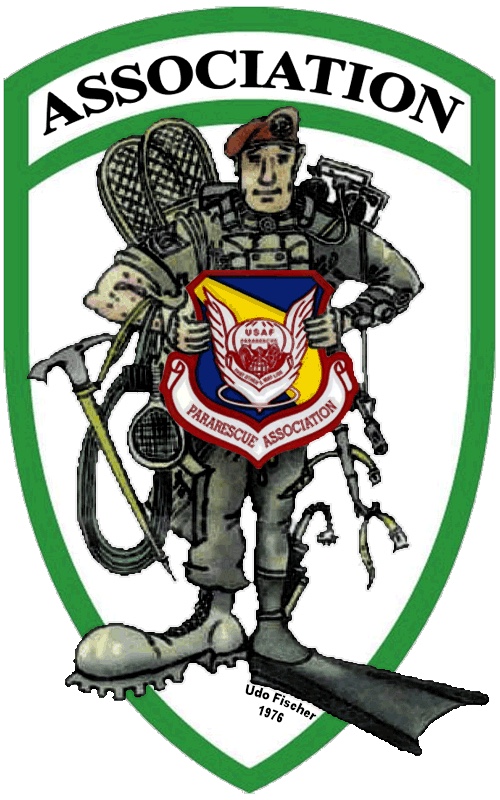
Training for Pararescuemen is continuous, focusing on improving procedures and developing new techniques. The integration of parachuting and scuba skills marked a significant advancement; fully equipped, a scuba-trained Pararescueman may carry up to 170 pounds of
gear.
One notable mission occurred at the end of the Gemini 8 space flight. After the mission was aborted due to equipment issues, a rescue crew from Naha Air Base, Okinawa reached the splashdown area and three Pararescuemen parachuted into the ocean, securing flotation devices to the spacecraft within 20 minutes.
They remained with the astronauts until a Navy destroyer arrived three hours later.
Pararescuemen have supported NASA's Skylab missions and currently provide rescue support for the space shuttle program, maintaining readiness through dedicated training.
The primary function of Pararescue is life-saving. Their work comprises a key element of the overall rescue process. For instance, in a two-week period, Pararescuemen responded to two separate emergencies involving Russian merchant seamen. In one case, they treated a severely
burned sailor aboard a vessel in the Atlantic Ocean. In another, a team provided medical aid to a sailor with back and head injuries off the Oregon Coast, remaining with the individual until further assistance was available.